
58 Gigawatts Of Solar Power Are Hiding In Plain Sight
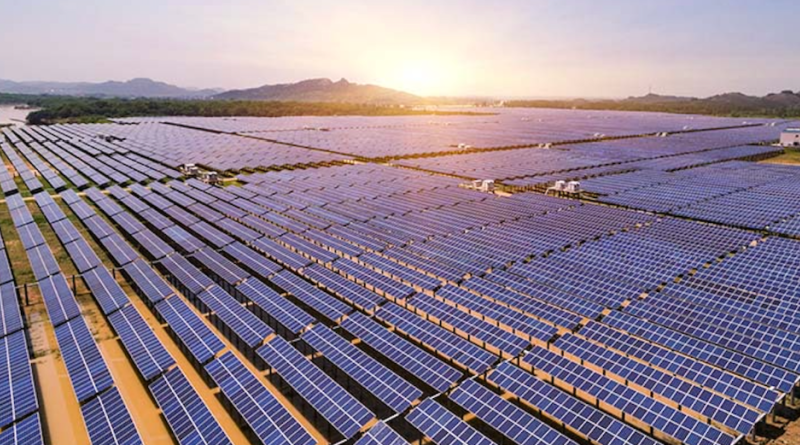
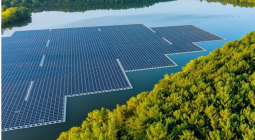
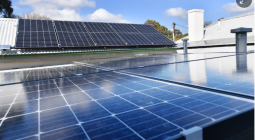
For all the efforts of the Trump administration to trample on the renewable energy momentum, the hits just keep on coming. Gigantic utility-scale solar plants get most of the attention, of course, but according to the US Energy Information Agency, as of last October, a total of 58.1 gigawatts’ worth of solar panels have been distributed among rooftops, parking lot canopies, and other small-scale locations around the US.
The US Solar Power Footprint Keeps On Growing
In years past, wind energy dominated the growth of renewables in the US, and that pattern is expected to continue in 2026. As capably summarized by Ken Bossong of the Sun Day Campaign,* the EIA anticipates that pattern will continue into 2026. Wind will account for about 11.4% of electricity generation in the US in 2026, with utility-scale solar fairly close behind at 8.1% and hydropower coming in at 6%. Including biomass and geothermal (but excluding small-scale, distributed solar), renewables will account for 26% of US electricity generation in 2026.
By way of comparison, the same mix of renewables (including utility-scale solar but excluding small-scale) accounted for 22.5% of electricity generation in 2026 and is projected to increase to almost 28% in 2027.
This year could also see utility-scale solar’s share of capacity surpassing wind for the first time, as the wind industry encounters significant pushback, particularly in the offshore sector. EIA projects that wind will grow by only 6% in 2026 and 6% in 2027, too.
In contrast, EIA anticipates that utility-scale solar solar capacity additions will increase by 21% in 2026 and another 21% in 2027, for a total of almost 70 gigawatts.
“EIA’s latest STEO confirms the SUN DAY Campaign’s consistent forecast of the past three years: utility-scale solar capacity should surpass that of wind at some point in 2026 (probably sometime mid-year),” Bossening notes.
The wild card is US President Donald Trump’s personal vendetta against offshore wind turbines. On December 22, the Interior Department abruptly halted work on five offshore wind farms totaling 8 gigawatts. However, federal judges have already allowed work to restart on two of the projects, making it more likely that the remaining three will be greenlit as well.
Solar Power Persists
Solar power has been established as the most economical, and quickest, way to add more kilowatts to the nation’s grid. It also provides property owners with a fast, economical way to add more revenue to their holdings, particularly in the case of brownfields and industrial sites where opportunities for other forms of development are limited.
One recent example is the leading US waste management firm WM. Over the years, WM has been installing solar panels and wind turbines on some of its landfills, working with different wind and solar installers on an ad hoc basis. Apparently the company has seen enough to convince them to dive in head first. Last week WM announced a new landfill-to-solar partnership with the Reactivate branch of the A-list energy firm Invenergy. If all goes according to plan, the two partners will convert 50, and possibly more, of WM’s properties to solar power.
Another fresh spark of life in the small scale distributed solar field also emerged earlier this week, when the US firm Aspen Power announced a fresh round of $200 million in funding from Deutsche Bank. “The financing positions Aspen Power to respond quickly to increasing demand for clean energy solutions, enabling expansion of its project pipeline, including community solar, commercial & industrial solar, small utility scale and storage offerings,” Aspen explained in a press statement.
“Solar continues to expand as one of the fastest-growing U.S. energy sectors, driven by declining costs, improving storage options, and strong demand from communities and commercial customers,” the company added.
In the same announcement, the Head of Infrastructure and Energy Financing at Deutsche Bank, Jeremy Eisman, affirmed that money talks. “Deutsche Bank recognizes the growing demand for distributed clean energy and the related need for flexible development capital,” Eisman said.
Deutsche Bank is not the only one. The leading firm Carlyle has also been supporting Aspen’s growth model, and they took note of the demand-side pressure for distributed energy solutions.
“Aspen Power has built a strong, resilient, and well-capitalized platform positioned to meet growing demand for distributed solar and storage nationwide,” said Carlyle Managing director Saurabh Anand.
Irrigation & The Farm-To-Solar Trend
If all goes according to plan, Aspen will deploy the new capital raise to expand beyond its existing footprint in to develop new solar projects nationwide.
In the meantime, another factor supporting the growth of solar power is the de-growth of irrigated farmland. In California, for example, the Westlands Water District has determined that it can’t sustain irrigation for farms in its territory. The agency is considering repurposing the land for roughly 21 gigawatts of solar and storage projects.
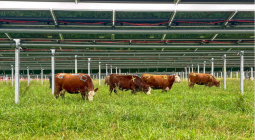
If past experience bears out, the stressed land beneath the solar panels will also benefit from the cooler, shadier environment, with the potential for native species restoration and other biodiversity improvements.
To cite one recent example, researchers at the 690-megawatt Gemini solar power plant in Nevada (pictured above) have been monitoring a rare plant in the pea family called threecorner milkvetch. Instead of falling in number as may be expected, milkvetch sightings increased after construction. “The results were striking, with 93 plants found on site in 2024 compared to 12 plants found before construction in 2018,” the researchers reported. The research team also found that plants growing within the solar array outperformed those outside the site on key metrics including width, height, and the number of flowers and fruits.
With that in mind, last fall the farmland conservation organization American Farmland Trust partnered with Reactivate and the Kentucky firm Edelen Renewables to launch a new initiative called Farmers Powering Communities initiative. The idea is to help farmers earn new revenue from solar power, with a focus on deploying solar panels on marginal lands for biodiversity and soil restoration, as well as using rooftops and other infrastructure.
Coal Power Is Kaput
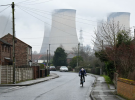
Against this backdrop, US Energy Secretary Chris Wright has taken to issuing legally questionable emergency orders forcing old, outdated coal power plants to keep running. However, lawsuits are beginning to pile up alongside the expense of operating obsolete power plants, while the evidence for economical, affordable solar power is piling up, too.
A new report prepared by the firm Synapse Energy Economics for the organization Coalition for Community Solar Access (CCSA), for example, describes how New York State can reduce electricity bills by adding 20 gigawatts to its distributed solar power profile, along with distributed energy storage.
As if on cue, the EIA posted a new analysis today, January 16, affirming its finding that “utility-scale solar is the fastest-growing source of electricity generation in the United States.”
“Almost 70 gigawatts (GW) of new solar generating capacity projects are scheduled to come online in 2026 and 2027, which represents a 49% increase in U.S. solar operating capacity compared with the end of 2025,” EIA emphasized.
The outlook for coal, on the other hand, is not so good, despite the legally questionable support of Secretary Wright. “With existing policies and scheduled retirements planned by plant operators, we expect that coal plant retirements will lead to U.S. coal-fired generation declining an average of 5% annually over the next two years,” EIA observed. By 2027, that will land coal at just 15% of power generation in the US, down from 17% in 2025 and down 50% from its peak in 2005.
Trump failed to save coal jobs during his first term in office, so it’s no surprise to see him fail this time around, too. For that matter, Trump has been failing at a lot of things, such as failing to win a Nobel Prize, and failing to ensure the timely release of the Epstein files as required by an Act of Congress. If you have any thoughts about that, drop a note in the comment thread.
Better yet, find your representatives in Congress and let them know what you think.
Cover photo: The Gemini solar power plant in Nevada is hosting the recovery of a rare plant called the three cornered milkvetch while adding 690 megawatts of clean power and 380 megawatts of storage to the local grid (cropped, courtesy of Primergy/Gemini).